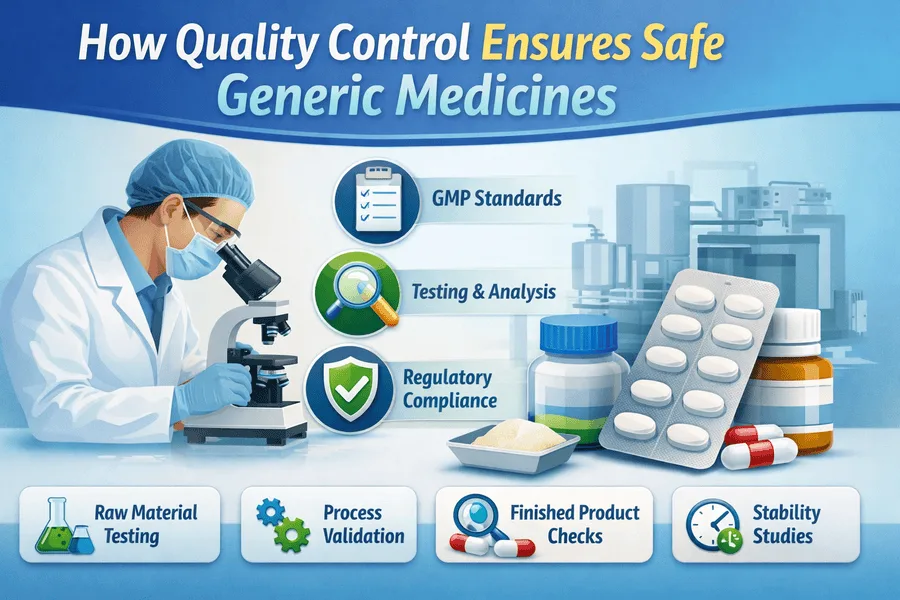
Generic medicines play a vital role in modern healthcare by providing affordable alternatives to branded drugs without compromising safety or effectiveness. Millions of patients worldwide rely on these medicines for treating chronic conditions, infections, and life-saving treatments. However, many people still ask an important question: Are generic medicines safe?
The answer lies in strict quality control systems implemented throughout the pharmaceutical manufacturing process. From raw material testing to final product verification, rigorous quality standards ensure that generic medicines meet the same safety, quality, and efficacy benchmarks as branded drugs.
In this article, we will explore how quality control ensures safe generic medicines, the processes involved, and why these measures are essential for protecting patient health.
What Are Generic Medicines?
Generic medicines are pharmaceutical drugs that contain the same active ingredient, dosage, strength, safety profile, and intended use as a branded drug whose patent has expired. These medicines are designed to deliver the same therapeutic effect but are usually available at a significantly lower cost.
Before reaching the market, generic medicines must prove bioequivalence, meaning they perform in the same way as the original branded drug in the body. This ensures patients receive the same clinical benefits.
Because of their affordability and accessibility, generic medicines are widely used in healthcare systems across the world.
Why Quality Control Is Critical for Generic Medicines
Quality control (QC) is essential in pharmaceutical manufacturing because even a minor variation in formulation, dosage, or contamination can affect patient safety.
Poor-quality medicines may contain incorrect ingredient levels, harmful contaminants, or inaccurate labels, which could lead to ineffective treatment or serious health risks.
Quality control ensures that every batch of medicine meets strict regulatory standards and delivers consistent therapeutic results.
Key goals of pharmaceutical quality control include:
- Ensuring drug safety and effectiveness
- Maintaining consistent dosage and formulation
- Preventing contamination and manufacturing errors
- Protecting patients from substandard medicines
Through strict monitoring and testing procedures, pharmaceutical companies can guarantee that generic medicines are safe for patients.
Role of Good Manufacturing Practices (GMP)
One of the most important frameworks supporting quality control in the pharmaceutical industry is Good Manufacturing Practices (GMP).
GMP is a globally recognized system that ensures medicines are consistently produced and controlled according to established quality standards. It covers every stage of drug manufacturing—from raw materials and equipment to staff training and packaging.
GMP guidelines help minimize risks such as:
- Cross-contamination between drugs
- Incorrect labeling
- Incorrect dosage levels
- Manufacturing defects
By following GMP standards, pharmaceutical manufacturers ensure that generic medicines meet international safety requirements.
Key Quality Control Processes in Generic Drug Manufacturing
Quality control involves multiple stages throughout the pharmaceutical production cycle. Each step is carefully monitored to ensure compliance with regulatory standards.
1. Raw Material Testing
The first step in quality control begins with testing raw materials used to manufacture medicines.
Pharmaceutical companies verify:
- Identity of the active pharmaceutical ingredient (API)
- Purity and potency of materials
- Absence of contaminants
Only materials that meet strict specifications are approved for production.
2. Process Validation
Manufacturing processes must be validated to ensure they consistently produce medicines that meet predefined quality standards.
This includes monitoring:
- Mixing and blending processes
- Tablet compression
- Coating and packaging
Process validation ensures the manufacturing procedure remains stable and reliable over time.
3. In-Process Quality Testing
During production, manufacturers perform in-process testing to detect any deviations from quality standards.
These tests include:
- Weight variation checks
- Dissolution testing
- Hardness testing for tablets
- Uniformity of dosage
If any irregularities are detected, the batch is investigated and corrected before continuing production.
4. Finished Product Testing
Before medicines are released into the market, the final product undergoes rigorous laboratory testing.
Quality control laboratories examine:
- Drug potency
- Stability and shelf life
- Microbial contamination
- Packaging integrity
Only batches that pass all testing requirements are approved for distribution.
5. Stability Studies
Stability testing ensures medicines remain safe and effective throughout their shelf life.
Pharmaceutical companies conduct long-term and accelerated stability studies to evaluate how drugs react to environmental factors such as:
- Temperature
- Humidity
- Light exposure
These studies determine appropriate storage conditions and expiration dates.
Regulatory Oversight and Compliance
Quality control in pharmaceutical manufacturing is not only managed internally by companies but also monitored by regulatory authorities.
In India, government regulations require pharmaceutical companies to implement updated GMP standards and comprehensive quality systems across all stages of production. These measures include risk-based quality management, equipment validation, and regular product quality reviews.
Global regulatory agencies such as:
- US FDA
- WHO
- European Medicines Agency
also enforce strict guidelines to ensure generic medicines meet international safety standards.
Importance of Documentation and Traceability
Another key component of quality control is documentation and record-keeping.
Pharmaceutical companies maintain detailed records for every stage of production, including:
- Raw material sourcing
- Batch manufacturing processes
- Quality test results
- Packaging and distribution
These records ensure full traceability, allowing manufacturers and regulators to quickly identify and resolve any potential issues.
Proper documentation also helps prevent data manipulation and ensures transparency in pharmaceutical manufacturing.
How Quality Control Builds Patient Trust
Quality control systems not only protect patient health but also build trust among healthcare professionals and consumers.
When pharmaceutical companies comply with strict quality standards and certifications such as WHO-GMP, doctors and pharmacists can confidently prescribe generic medicines knowing they meet global safety requirements.
This trust is essential for expanding access to affordable medicines and improving global healthcare outcomes.
The Future of Pharmaceutical Quality Control
Advancements in technology are transforming how pharmaceutical companies manage quality control.
Modern innovations include:
- AI-driven manufacturing monitoring
- Automated laboratory testing
- Digital quality management systems
- Blockchain-based drug traceability
These technologies improve accuracy, efficiency, and transparency in pharmaceutical manufacturing, further strengthening the safety of generic medicines.
As the industry continues to evolve, quality control systems will become even more advanced and reliable.
Conclusion
Quality control plays a fundamental role in ensuring the safety and effectiveness of generic medicines. Through strict regulatory standards, advanced manufacturing processes, and continuous monitoring, pharmaceutical companies can guarantee that generic drugs meet the same high standards as branded medicines.
From raw material testing and process validation to finished product evaluation and regulatory compliance, every step in the production process is designed to protect patient health.
For healthcare providers, pharmacists, and patients, understanding how quality control works helps build confidence in generic medicines. With rigorous systems in place, these medicines continue to offer safe, reliable, and affordable treatment options worldwide.