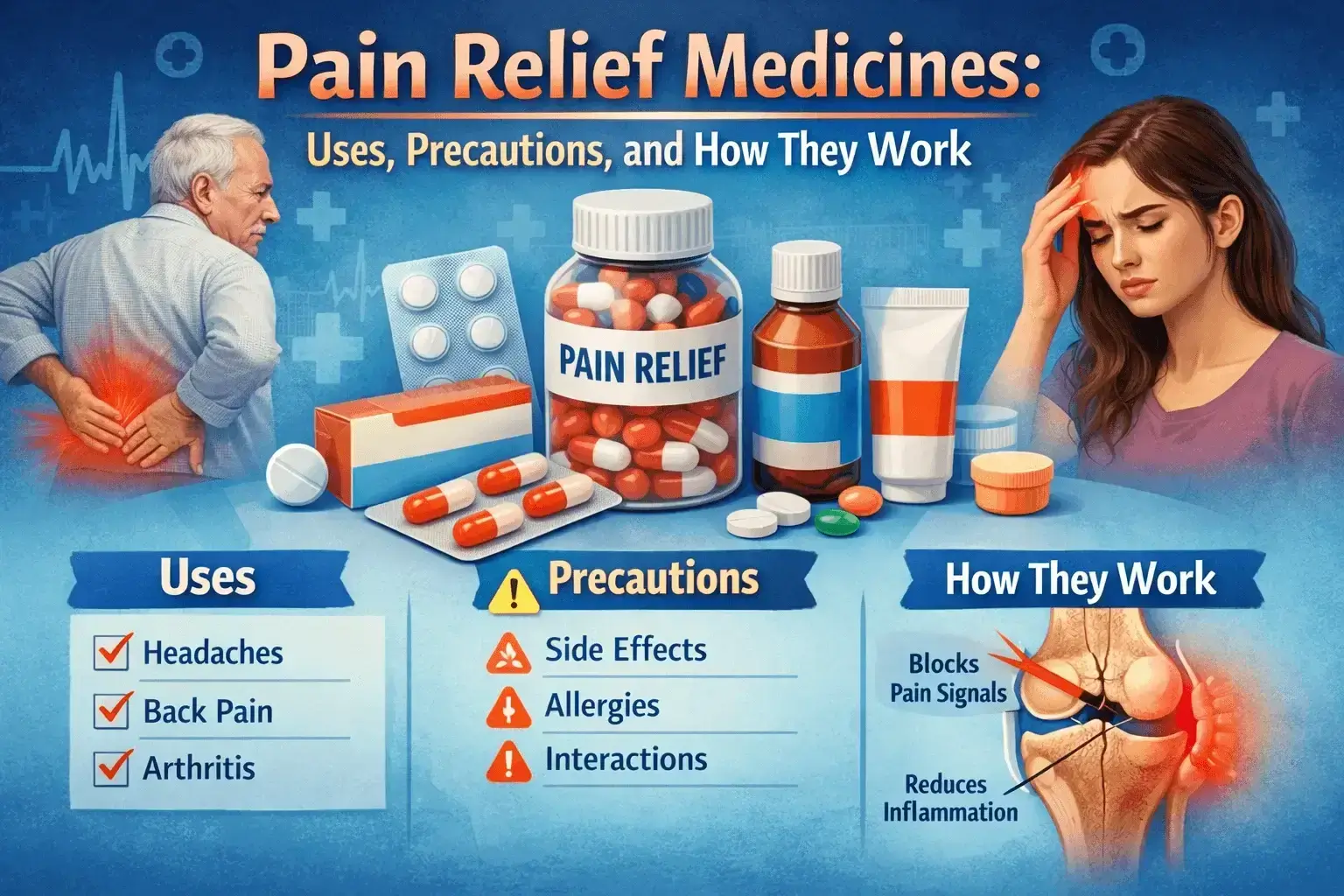
Pain is one of the most common reasons people seek medical help. Whether it’s a headache, muscle ache, joint pain, or post-surgical discomfort, pain relief medicines can provide fast and effective management. However, these medications are not all the same, they work differently, are used for different problems, and require specific precautions to be safe and effective.
In this comprehensive guide, we’ll explain what pain relief medicines are, how they work, their common uses, and important precautions you should follow for safe and effective use.
What Are Pain Relief Medicines?
Pain relief medicines, also known as analgesics or painkillers, are drugs designed to alleviate pain. Some of them also reduce inflammation (swelling) and fever, depending on their class and mechanism of action. They are available in different forms, from over-the-counter (OTC) tablets and gels to stronger prescription medicines.
Pain relief medicines can broadly be classified into:
- Non-opioid pain relievers – including acetaminophen (paracetamol) and NSAIDs
- Opioid pain relievers – stronger medicines prescribed for severe pain
- Topical formulations – gels, creams or sprays applied to skin
- Combination medicines – containing more than one pain relief ingredient
How Pain Relief Medicines Work
Different pain relief medicines work in distinct ways depending on their class and target:
1. Inflammation Blocking (NSAIDs)
Nonsteroidal anti-inflammatory drugs (NSAIDs) like ibuprofen, naproxen, diclofenac, and aceclofenac help block prostaglandins, chemicals your body releases in response to injury or inflammation that trigger pain and swelling. By inhibiting enzymes (COX-1 and COX-2) responsible for prostaglandin production, NSAIDs reduce both pain and inflammation.
2. Raising Pain Threshold (Paracetamol / Acetaminophen)
Paracetamol primarily works in the brain to increase the threshold for pain perception. Unlike NSAIDs, it doesn’t have strong anti-inflammatory effects but is effective for pain and fever.
3. Opioid Receptor Activation
Opioid pain relievers (e.g., codeine, tramadol) bind to specific receptors in the brain and spinal cord. This action blocks pain signals from reaching the brain, reducing the sensation of pain. Because they act centrally, opioids are often prescribed for moderate to severe pain that does not respond to other medications.
4. Topical Action
Topical pain relief products (gels, creams) like diclofenac gel work locally on muscles and joints to reduce pain and inflammation without significant systemic effects.
Common Uses of Pain Relief Medicines
Pain relief medicines serve many purposes:
Mild to Moderate Pain
OTC options like acetaminophen (paracetamol), ibuprofen, and naproxen are often used for headaches, muscle strains, back pain, and menstrual cramps.
Pain With Inflammation
NSAIDs are particularly effective when pain is associated with inflammation — for example, arthritis, sprains, and joint pain.
Fever Reduction
Many pain relievers like paracetamol and some NSAIDs also bring down fever when used correctly.
Severe or Acute Pain
Prescription opioids may be used for post-surgical pain, injuries, or when other pain relievers are not effective. These are used under strict medical supervision due to risks of side effects and dependence.
Muscle Spasms
Some combination medicines include a muscle relaxant along with an analgesic to treat pain accompanied by muscle stiffness.
Examples of Pain Relief Medicines and How They Work
Here are a few commonly prescribed pain relief medicines:
Combination Medicines (Diclofenac + Paracetamol)
Medicines like dp gesic tablets combine diclofenac (NSAID) with paracetamol. This combination helps reduce pain and inflammation effectively and is commonly used for musculoskeletal pain, headache, and joint pain.
Aceclofenac + Paracetamol Tablets
Products like Gesivan-P Tablet combine NSAID and paracetamol to block pain signals and treat pain with inflammation such as arthritis.
Multi-Action Medicines (Pain + Muscle Relaxant)
Tablets such as Gesic MR include diclofenac, paracetamol, and a muscle relaxant. This triple effect helps relieve pain, reduce swelling, and ease muscle tension.
Opioid Analgesics
Drugs like codeine are used for moderate to severe pain but require careful monitoring due to potential risks.
Precautions and Safety Tips
While pain relief medicines can be highly effective, safe use is essential to avoid side effects or complications:
1. Follow Dosage Instructions
Always take pain relief medicines exactly as directed on the label or by a healthcare provider. Overdose, especially with paracetamol – can cause liver damage.
2. Do Not Mix Medications Without Advice
Avoid combining medicines that contain the same active ingredient (e.g., multiple paracetamol products) to prevent accidental overdose.
3. Kidney or Liver Conditions
People with kidney or liver disease need special caution when using NSAIDs or paracetamol. Long-term use can worsen organ function.
4. Stomach Protection
NSAIDs increase the risk of ulceration, stomach bleeding, and irritation, taking them with food can reduce these effects.
5. Opioids and Dependence
Opioid pain relievers have risks of dependence, misuse, and side effects like drowsiness, constipation, and respiratory depression. It’s vital to use them under strict medical supervision.
6. Special Populations
Children, pregnant women, and elderly patients may require modified doses or alternative therapies; always consult a doctor before use.
7. Alcohol and Pain Medicines
Avoid alcohol when taking pain medications as it increases the risk of stomach bleeding, liver damage, and serious side effects.
When Should You Seek Medical Help?
Even with proper use, some signs require immediate medical attention:
- Severe abdominal pain or persistent headache
- Signs of allergic reactions (rash, swelling, breathing difficulty)
- Yellowing of skin/eyes (possible liver issues)
- Pain not relieved by medications and affecting daily activities
Final Thoughts
Pain relief medicines are vital tools in managing everyday discomfort, injuries, and chronic conditions. Understanding their mechanism of action, proper uses, and potential risks helps you use them safely and effectively. Always follow medical advice and dosage guidelines, especially for prescription medicines or long-term use. With the right knowledge, pain can be managed safely, improving your quality of life without compromising health.