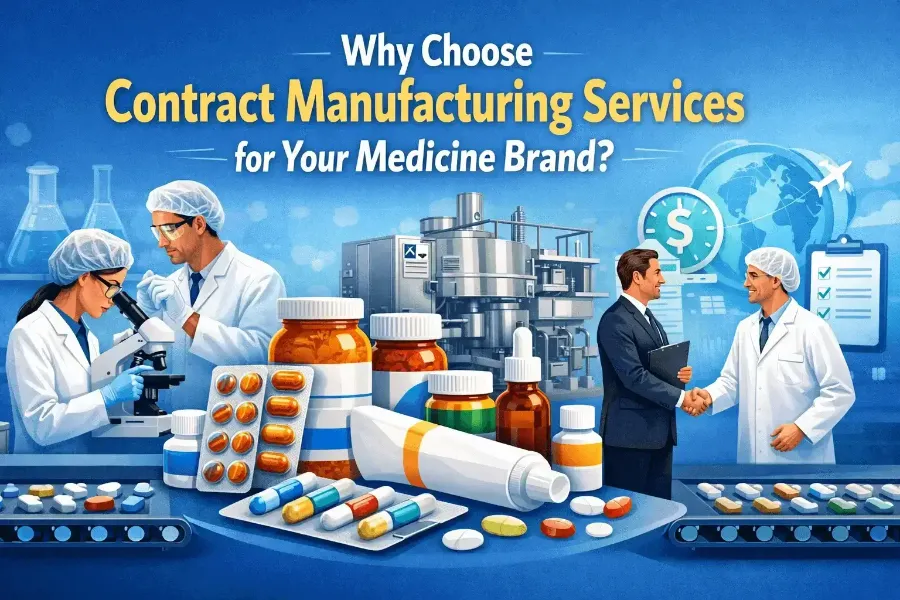
In today’s fast-paced pharmaceutical market, launching and scaling a medicine brand demands more than just a good formulation. It requires reliable manufacturing, regulatory compliance, cost management, and strategic focus on your brand identity. This is where contract manufacturing services become a game-changer for pharmaceutical startups, established medicine brands, and healthcare innovators.
In this blog, we’ll explore what contract manufacturing is, its major benefits, how it works, and why it’s especially valuable in India’s booming pharma ecosystem, ensuring your brand succeeds in a competitive global market.
What Is Contract Manufacturing?
Contract manufacturing, also known as third-party manufacturing – is a business model where a pharmaceutical company outsources the production of medicines to a specialised manufacturer. The contract manufacturer produces medications based on your formulations and specifications while ensuring compliance with regulatory quality standards.
In essence, your brand retains ownership and marketing rights, while the manufacturing partner handles production, quality control, and possibly packaging and regulatory documentation.
The Growing Importance of Contract Manufacturing in Pharma
The pharmaceutical industry is rapidly evolving. To stay competitive, brands are increasingly choosing contract manufacturing over building and maintaining their own manufacturing facilities. In markets like India – a global pharma hub, this outsourcing model has become essential.
This trend isn’t just about cutting costs — it’s about efficiency, expertise, quality standards, and strategic focus.
Core Benefits of Contract Manufacturing for Medicine Brands
Let’s break down why medicine brands should seriously consider partnering with a contract manufacturer.
1. Cost Efficiency and Lower Capital Investment
Building a pharmaceutical manufacturing unit requires huge capital – land, GMP-certified infrastructure, equipment, trained manpower, and quality control systems.
Contract manufacturing eliminates these costs. You only pay for actual production, without investing in facilities, machines, or workforce maintenance. This can save up to 30–40% on infrastructure and operational costs, allowing you to reinvest in product innovation and marketing.
2. Access to Expertise and Advanced Technology
Contract manufacturers are specialists. They invest in state-of-the-art facilities, trained scientists, production engineers, and quality assurance teams. This means your medicine is produced using best practices, precision equipment, and strict quality control protocols.
Whether it’s tablets, capsules, syrups, injections, or ophthalmic solutions, these partners ensure high-quality output that meets global standards.
3. Faster Time to Market
One of the biggest challenges for medicine brands is bringing products to market swiftly. From facility setup to regulatory approvals, in-house production cycles can be lengthy.
With contract manufacturing, production can begin almost immediately upon formulation approval — speeding up the entire launch process. This agility is critical in markets where first-mover advantage and rapid market penetration can define success.
4. Scalability and Flexibility
Demand for medicines can fluctuate — especially in response to seasonal trends or public health needs.
Contract manufacturing partners provide scalable solutions. Whether you need small batches for clinical trials or large volumes for commercial distribution, they can adapt — without you worrying about capacity, manpower, or logistics.
5. Regulatory Compliance and Quality Assurance
Medications must meet stringent regulatory standards set by national and international authorities (FDA, EMA, WHO-GMP, CDSCO, etc.).
Contract manufacturers have built-in compliance systems — GMP-certified operations, robust documentation systems, and rigorous quality testing. These reduce your risk of non-compliance and help you maintain consistent product quality and safety.
6. Focus on Core Competencies
By outsourcing manufacturing, medicine brands can focus on what matters most:
- Brand building
- Marketing and sales
- Product portfolio expansion
- Customer engagement
- Strategic partnerships
This focus accelerates growth and innovation without being bogged down by production challenges.
How Contract Manufacturing Works
Understanding the process helps you navigate partnerships and set realistic expectations:
1. Product Formulation
You provide the formulation details, including composition, potency, and packaging expectations.
2. Contract Negotiation
Key terms like pricing, batch sizes, timelines, quality checks, and confidentiality are agreed.
3. Production Planning
The manufacturer schedules production and sources raw materials if required.
4. Manufacturing & Quality Control
Strict adherence to quality standards ensures consistency across batches.
5. Packaging & Delivery
The finished product is packaged and delivered according to your specifications.
This collaborative framework ensures transparency and performance at every stage.
Why India Is Ideal for Pharma Contract Manufacturing
India has emerged as a global pharmaceutical manufacturing powerhouse — known for:
✔ A large network of WHO-GMP certified manufacturers
✔ Competitive pricing and efficient production
✔ Skilled technical workforce
✔ Export-ready compliance
✔ Supportive regulatory framework
Partnering with an Indian contract manufacturer makes business sense for medicine brands targeting both domestic and international markets.
Real-World Example: Mediclock Healthcare
Mediclock Healthcare Pvt Ltd – Contract Manufacturing Partner in India is one such trusted partner offering comprehensive pharma contract manufacturing solutions. With 20+ years of experience, Mediclock provides:
- Global reach and cost-effective solutions
- Regulatory support and compliance assurance
- A wide range of dosage forms (tablets, syrups, injections, capsules, creams, etc.)
- Scalable production capacity
- Transparent collaboration and customer service excellence
Their commitment to quality and flexibility makes them an ideal choice for brands looking to launch or expand medicine portfolios.
Final Thoughts
Contract manufacturing isn’t just about outsourcing production — it’s a strategic business decision. For medicine brands, especially in competitive markets, partnering with a reliable contract manufacturer offers a competitive edge through:
✔ Cost savings
✔ Faster launches
✔ High quality and compliance
✔ Scalability
✔ Focus on growth drivers
If you’re ready to take your medicine brand to the next level, exploring contract manufacturing services could be one of the most impactful decisions you make.